

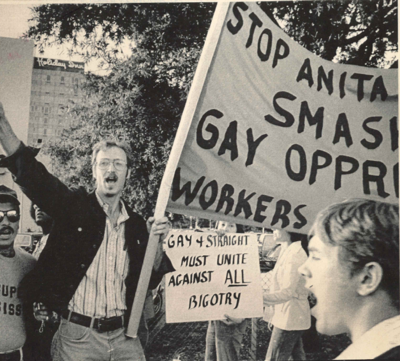
LGBT activists protesting in Richmond in 1969, Image courtesy of Richmond Times-Dispatch
Amuse is chock-full of amazing stories about cities across the U.S. and Canada. In this blog series, Amusings, we’re delving deeper into the hidden, secret, and lesser-known histories of the places you love to visit - or haven’t discovered yet! For more curious content, be sure to download the Amuse app and start exploring!
In the 1960s, Richmond, Virginia was home to a bustling and diverse countercultural community. These communities often congregated in clearly defined blocks of the city and though part of the more conservative south, the LGBTQ+ community in Richmond contributed heavily to the counterculture scene. The neighborhood frequented by Queer Richmonders was known as "The Block" from the 1940s to the early 1970s and was outlined by First, Franklin, Main, and Foushee Street. Eventually, The Block became such a popular neighborhood that the area eventually stretched to include Grace Street by 1970.
Throughout The Block's reign over Richmond's queer nightlife, bars and clubs faced targeted harassment from the Virginia Alcoholic Beverage Control Authority (ABC) for serving alcohol to gay patrons.Through the late 1950s and 1960s, gay bars on The Block - and across Virginia - saw closures mandated by the ABC Authority’s laws against serving alcohol to homosexuals (Bray 2013). In 1959, 85 percent of felony arrests in Richmond occurred between two blocks on Grace Street, where popular bars for LGBT customers and the local counterculture gatherings stood (Brumfield 2013).
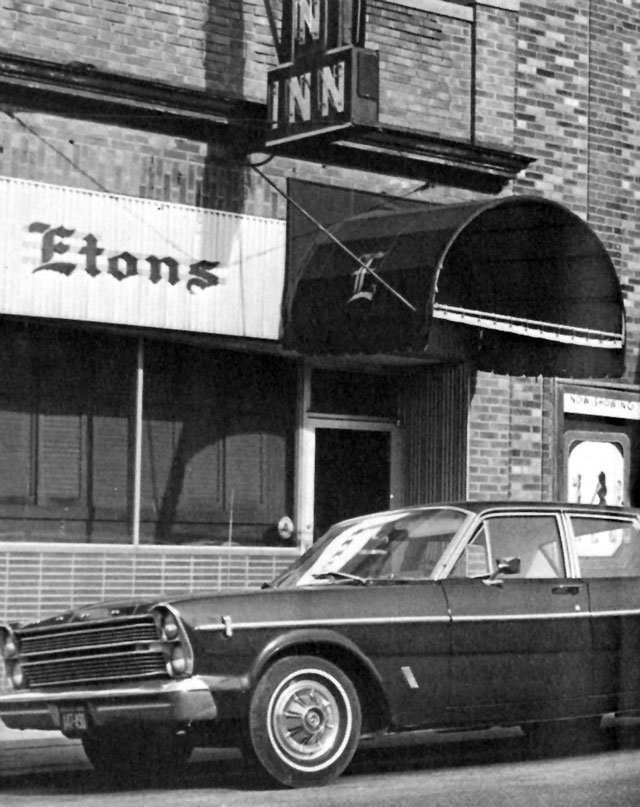
Marroni’s, one of the most popular gay bars in the city, was completely shut down in 1962 by the ABC Authority. Eton’s, located only a block away from Virginia Commonwealth University (VCU) became the new hotspot for gay nightlife. After an investigation by the ABC Authority found eight separate charges against the owner of Eton’s, his license was revoked and the bar was closed in 1967. Eton’s was a hub for not only the gay community, but the counterculture community as a whole, and the loss of this venue was a blow to the neighborhood. Many notable names of the Richmond counterculture movement like painters Susan Bush and Ray Herman, as well as gay rights activists Tony Seguro and Marsh Harris often found themselves surrounding a table at Eton’s before its closure. Eton’s eventually reopened in the 1970s under a new owner, but students at the nearby university were banned from attending Eton’s when it reopened for its “questionable denizens” and “sleazy temptations” (Brumfield 2019).
Renee’s and Rathskeller’s were two more gay bars on The Block that were both shut down in March of 1969. The closure of these bars led to the first protest on anti-gay laws in Virginia, as well as the introduction of Leo Joseph Koury as the self-appointed “Godfather of the Gay Community.” Koury found a way to skirt the rules, and to profit off of and monopolize gay nightlife in Richmond. Each time a gay bar was closed by the ABC Authority, Koury would purchase the bar and rename it, while keeping the same clientele with a ‘business in the front, party in the back’ business model. Koury would host regulars and heterosexual guests in the front of the bar, while gay customers entered through the back of the bar to a private space (Holter 2023). In this way, Koury exemplified the “stick it to the man” mentality of many counter-culturalists.
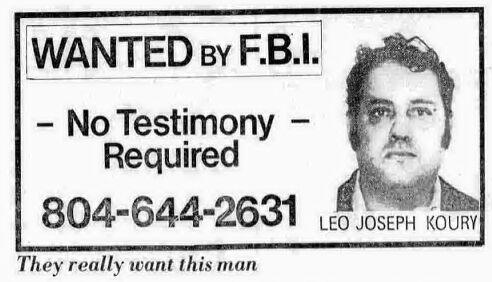
As time went on, the counterculture that had been so strong during the 1960s began to wane. However, the gay community remained strong and present despite many challenges. In earlier decades, men who were found guilty of homosexual acts were publicly shamed in newspapers for their family, coworkers, and acquaintances to read (Fluet 2020). Men cruising in The Block were risking their reputation, and likely their lives, when engaging in the local nightlife. However, through advocacy, protest, and a refusal to disappear, things have changed. In October of 1991, the case of French Quarter Cafe vs. Virginia Alcoholic Beverage Control Board declared anti-gay ABC regulations unconstitutional, allowing gay bars to reopen and proudly serve their customer base throughout the state (Harris 1991).
Richmond, Virginia is now a thriving center for LGBT individuals in the state. Annual pride parades, openly queer institutions, and five defined ‘gay bars’ in the city welcome LGBT visitors and tourists every year. While the early 20th century saw anti-LGBT legislation sweep across Richmond, the city is now a thriving queer community with one of the largest gay populations in Virginia and an impressive number of LGBT rights activists in political positions to represent the city. Richmond truly embraces their state motto: Virginia is for Lovers.
Written by Ethan Ryan, Content and Marketing Assistant at Amuse
Works Cited
Bray, Cindy. “ABC Regulations Challenged in Court.” Rainbow Richmond: LGBTQ History of Richmond, VA, 1625-2010, OutHistory, 2013. Accessed September 26, 2023, https://outhistory.org/exhibits/show/rainbow-richmond/the-fight-continues/abc-regulations.
Brumfield, Dale. “A Street Without Grace.” The Commonwealth Times, July 1, 2013, https://commonwealthtimes.org/2013/07/01/a-street-without-grace/.
Brumfield, Dale. “Diamonds in the Rough.” Richmond Magazine, November 4, 2019, https://richmondmagazine.com/news/features/diamonds-in-the-rough/.
Fluet, Joseph (producer). Meet Me By The Magnolia Tree. 2020; Richmond, VA, YouTube video, https://www.youtube.com/watch?v=wIOuHC9hJyE.
Harris, John F. “VA. To Drop Its Ban on Gay Bars.” Washington Post, Washington, D.C., October 19, 1991.
Holter, Em. “‘The Block’: The Underground Queer Scene in Richmond.” Richmond Times-Dispatch, June 25, 2023, https://richmond.com/the-block-the-underground-queer-scene-in-richmond/article_a382ce77-449c-54e6-b2c9-2c3a1540c30b.html.
Let's chat about how Amuse can help maximize your organization's impact.


