
_Amuse is chock-full of amazing stories about cities across the U.S. and Canada. In this blog series,_ Amusings_, we’re delving deeper into the hidden, secret, and lesser-known histories of the places you love to visit - or haven’t discovered yet! For more curious content,_ be sure to download the Amuse app and start exploring!
In the 1970s, Disco music was dominating top 40 radio stations across the world. Artists like The Bee Gees, Donna Summer, and ABBA took the world by storm and fans gathered from near and far to hear their favorite disco artists at venues like The Warehouse in Chicago. However, the growth of disco did not come without detractors. The “Disco Sucks” movement began to grow alongside disco itself, with rock ‘n’ roll fans growing tired of disco’s takeover of radio airwaves. The “Disco Sucks” movement culminated in a 1979 riot at Comiskey Park in Chicago, where Chicago DJ Steve Dahl encouraged baseball fans to bring disco records to the park as part of a promotion titled “Disco Demolition Night.”
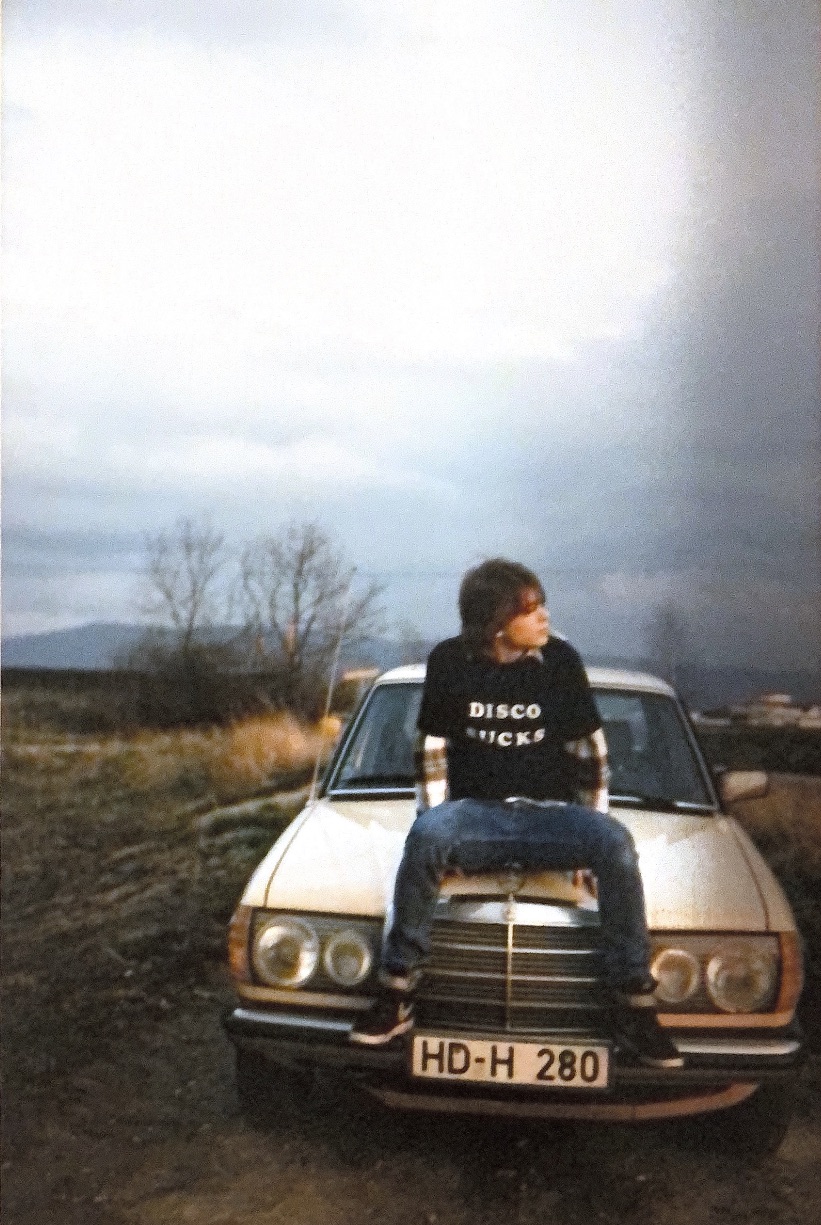 My uncle in a “DISCO SUCKS” shirt, Germany, 1980
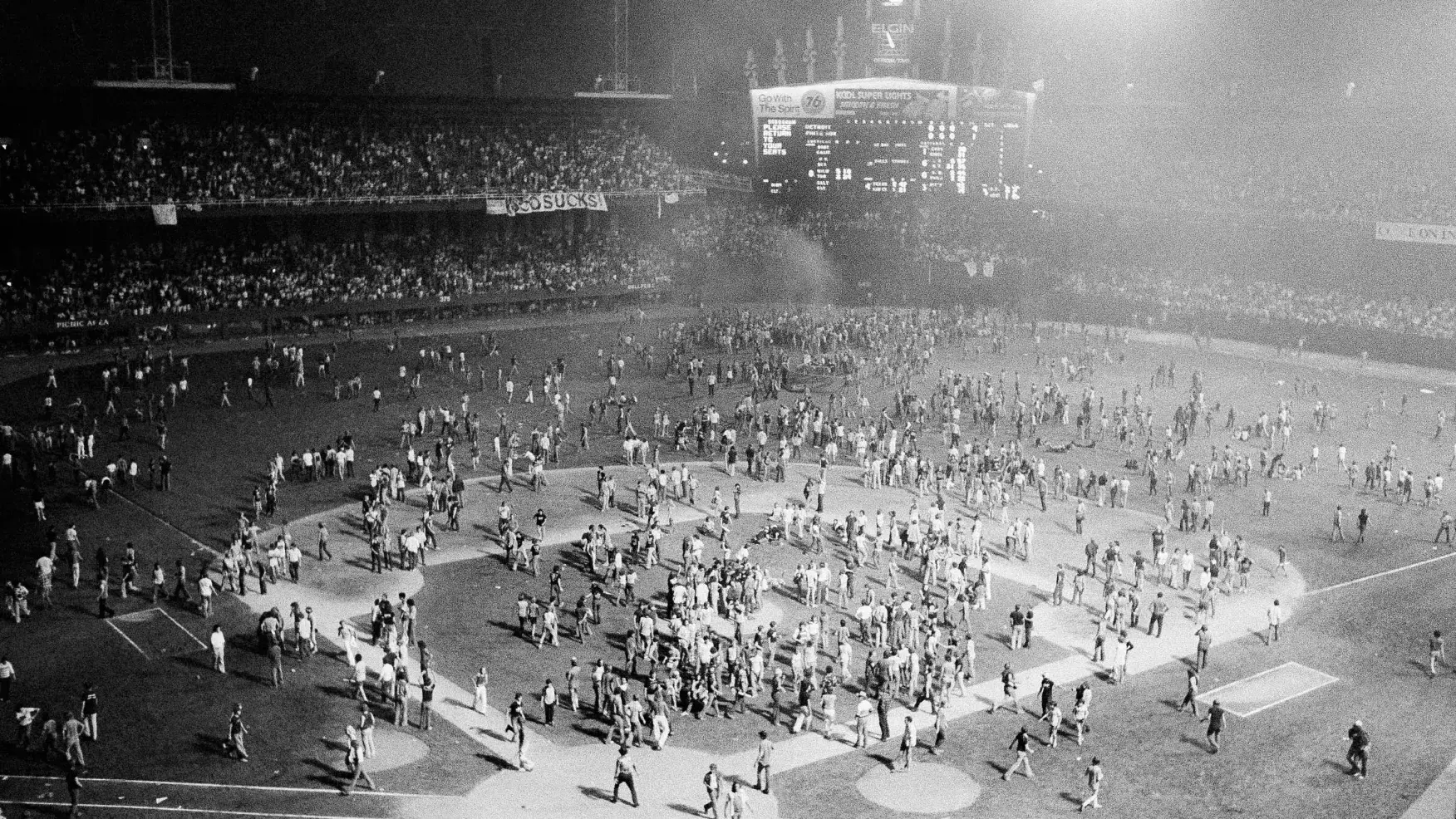
In the summer of 1979, attendance at Comiskey Park was less than 50% of the park’s capacity. In an attempt to raise attendance numbers, Steve Dahl promoted “Disco Demolition Night,” with plans to detonate crates of disco records brought by baseball fans and locals who hung “DISCO SUCKS” banners from the stands. Fans who brought records were enticed with 98 cent entry (instead of the average cost of $4) to that night’s game. On the night of the planned demolition, the game sold out and over 20,000 people were left outside of the stadium, trying to enter with their disco records.
After a Chicago loss to the Detroit Tigers, Steve Dahl took to the pitchers' mound in a Jeep, circling crates of disco records and leading a chant of “DISCO SUCKS!”
“This is now officially the world’s largest anti-disco rally! Now listen – we took all the disco records you brought tonight, we got ‘em in a giant box, and we’re gonna blow ‘em up real good.” – Steve Dahl, July 12, 1979
With these words, Steve Dahl detonated the explosives rigged up to the records, exploding them and leaving a hole in the pitchers' mound. After the explosion, thousands of attendees rushed the field and climbed fence poles, set fire to records, and tore up grass on the field. The field was destroyed and players, who were preparing for a second game, were attacked and their possessions ransacked. While a bonfire surged in the center of the field, signs lit up with notices for attendees to return to their seats, but the notices were ultimately ignored.
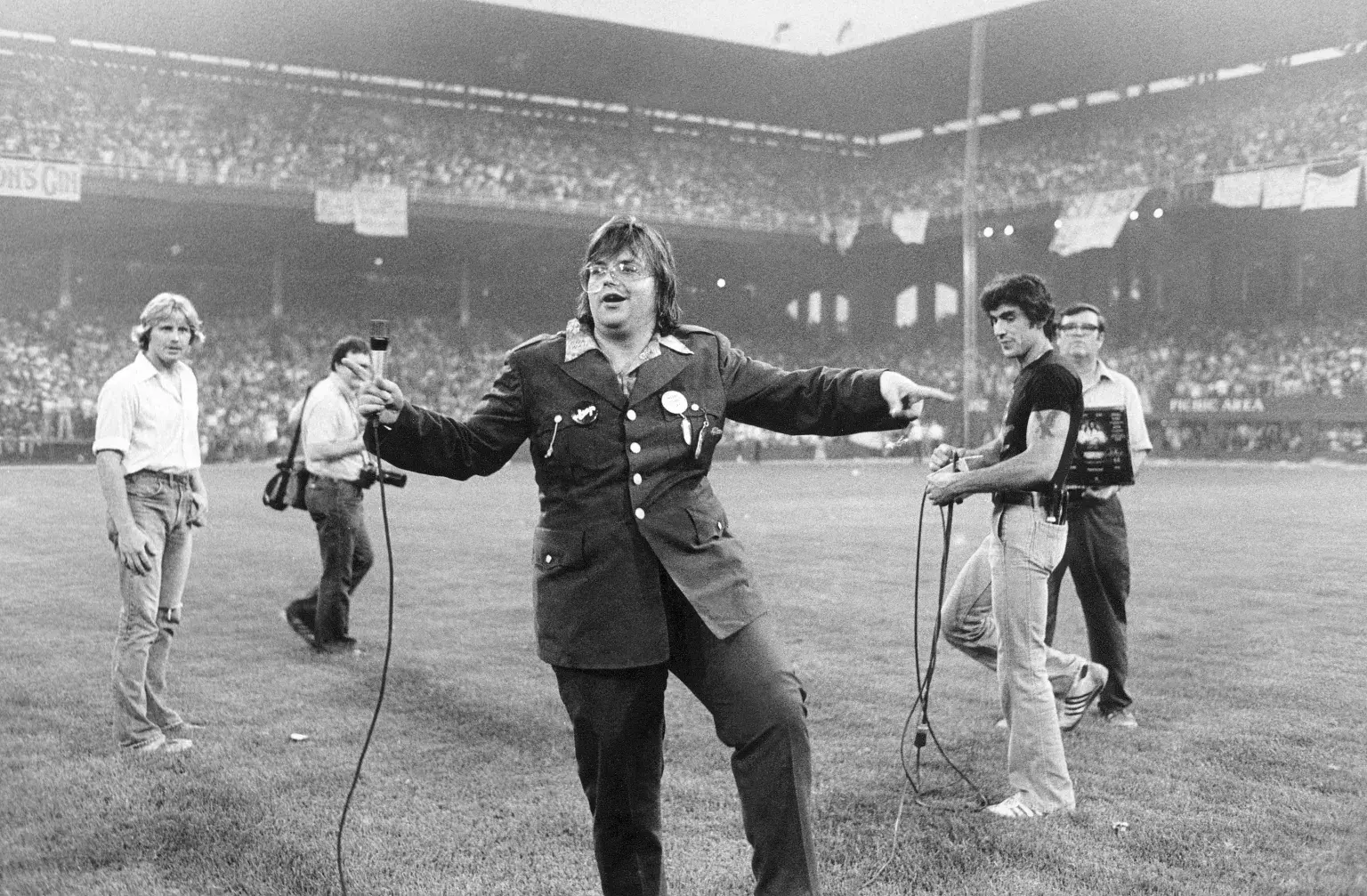 Steve Dahl on Comiskey Field during Disco Demolition Night, 1979 (Courtesy of Chicago WGN)
Chicago police arrived in riot gear to quell the crowds and prepare the field for the scheduled second game. After nearly forty arrests for disorderly conduct, MLB executive Mike Veeck encouraged the second game to continue, but even after an hour of clean-up following, the field was in such disarray that a proper game could not be played. The White Sox were forced to forfeit to the Tigers.
The popularity of disco declined in the late 70s and into the early 80s, and many believed that Disco Demolition Night had an impact on the genre. Historian Gillian Frank believes that the night at Comiskey Park created a “nationwide expression of anger against disco that caused disco to recede quickly from the American landscape” (Frank 2007). The event was also deemed an expression of bigotry, as disco was created and lauded by people of color, queer performers, and other minority groups who were often left out of popular media.
As the fiftieth anniversary of Disco Demolition Night approaches, the genre has seen a resurgence in pop culture. Artists like ABBA and Earth, Wind, and Fire continue to reach tens of millions of listeners on music streaming platforms like Spotify and Apple Music. Fashion of the 70s saw a revival in the late 2010s, with motifs and silhouettes reminiscent of a quintessentially Disco style . The genre may not have the reach that it did in the 1970s, but disco itself still continues to impact modern culture, in spite of the nearly 50,000 people who gathered at Comiskey Park in 1979 to chant, “DISCO SUCKS!”
Written by Ethan Ryan, Content and Marketing Assistant at Amuse
Works Cited
Frank, Gillian. “Discophobia: Antigay Prejudice and the 1979 Backlash against Disco.” Journal of the History of Sexuality 16, no. 2 (2007): 276-306.
