

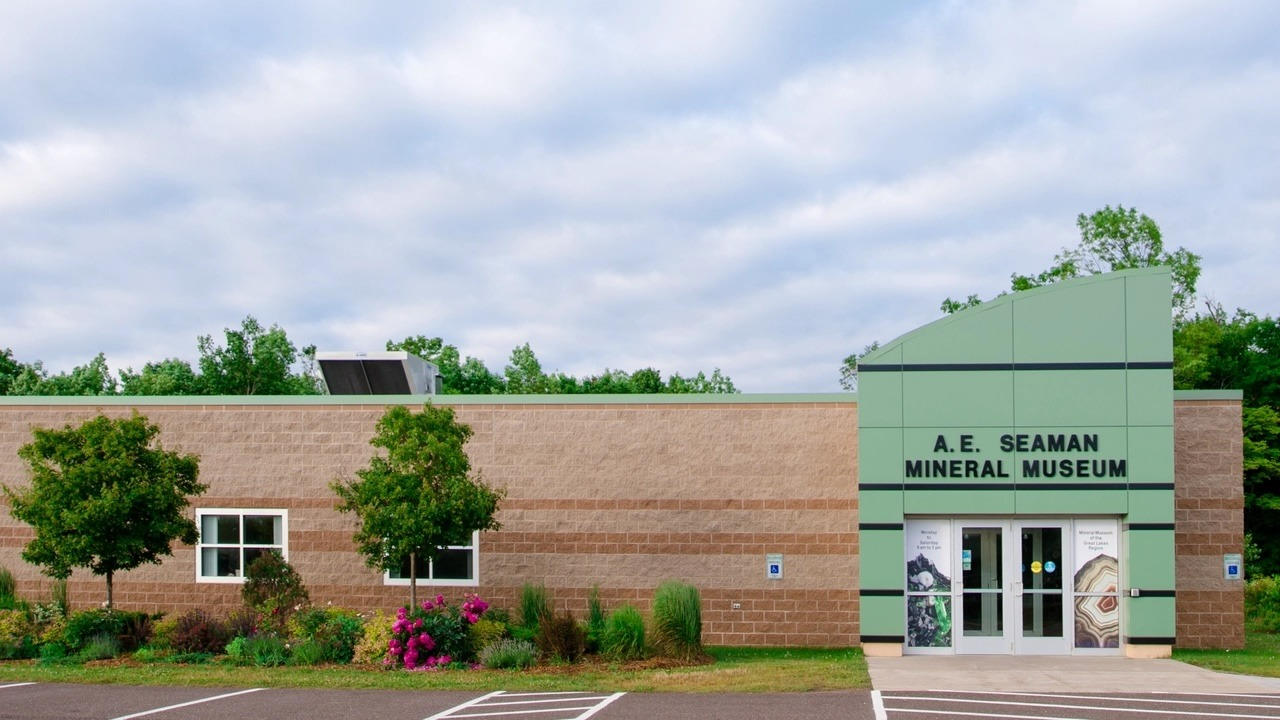
Front of the A. E. Seaman Mineral Museum. Courtesy of A.E. Seaman Mineral Museum.
In creating a platform that sparks curiosity and delights users in their learning, we think a lot about the relationship between inspiration and education at Amuse. Leading someone to the questions they didn’t know to ask before is often more valuable than simply leading someone to a piece of information they didn’t know before.
For example, I could tell you that the A.E. Seaman Mineral Museum is located on the campus of Michigan Technical University (Michigan Tech) in Houghton, Michigan, on the Keweenaw Peninsula that juts out into Lake Superior towards Canada. But if you ask why this museum is there, you’ll hear a much more interesting story - and learn a lot more, too.
When chatting with John Jaszczak, Director and John and Phyllis Seaman Endowed Curator of the A.E. Seaman Mineral Museum, we started with this question of place. I’d heard some interesting facts about the museum and its lauded specimens, but I wanted to know the reason why the museum ended up in Houghton, a town named for Michigan’s very first state geologist. John told me the geology of the museum’s location is a marvel in and of itself: billions of years ago, a perfect storm of geological phenomena - a thinning of the Earth’s crust, enormous lava flows, a continental collision - resulted in the largest native copper deposit in the world. Indigenous traders unearthed and distributed this copper to other parts of the country, then Europeans arrived and by the mid-1800s, billions of pounds of copper were being mined on the Keweenaw Peninsula. The A.E. Seaman Mineral Museum, established in 1902 to house minerals used to train geologists who would support the booming mining industry, tells the history of its home region through its extensive collection of copper specimens and other Great Lakes minerals, in addition to beautiful and rare minerals from around the world.

During our conversation, John brought out a large copper specimen from the collection that he had recently showed a visiting class of fifth graders: a lustrous group of crystals that looked like an abstract sculpture or maybe a small, copper-colored dragon. Even without the historical background, the sheer size and beauty of the copper had a “wow” factor. “That’s one of the things that attracts us to minerals,” John said: “The textures, the shapes of the crystals, the colors…whether you're an artist or a scientist, young or old, a collector or not, I hope people have wow experiences in the museum’s different galleries." Exhibits like “Fluorescent Minerals,” which includes an automated ultraviolet light display, are specially designed for that “wow” moment, but everywhere in the museum visual inspiration is emphasized as the minerals largely stand alone.
To supplement and support the museum’s vision for the visitor experience, Amuse provides a digital alternative to physical labels. Museum guests can admire these beautiful minerals unencumbered, then use their personal devices to unlock stories about the history and science behind them through videos, trivia, fun facts, and guided tours created by curators like John, other experts, and even Michigan Tech students. " Often, that information is locked and inaccessible, and we don't even know to ask some questions. I can get overwhelmed in museums. I don't know where to focus. I'm always thinking, what am I missing in the next case? And then I miss everything. It makes all the difference in the world to have a tour guide to interact with you, to find out what you're interested in or point out something that interests them. I can't do that with everybody here, though. Amuse is a solution I'm excited about."
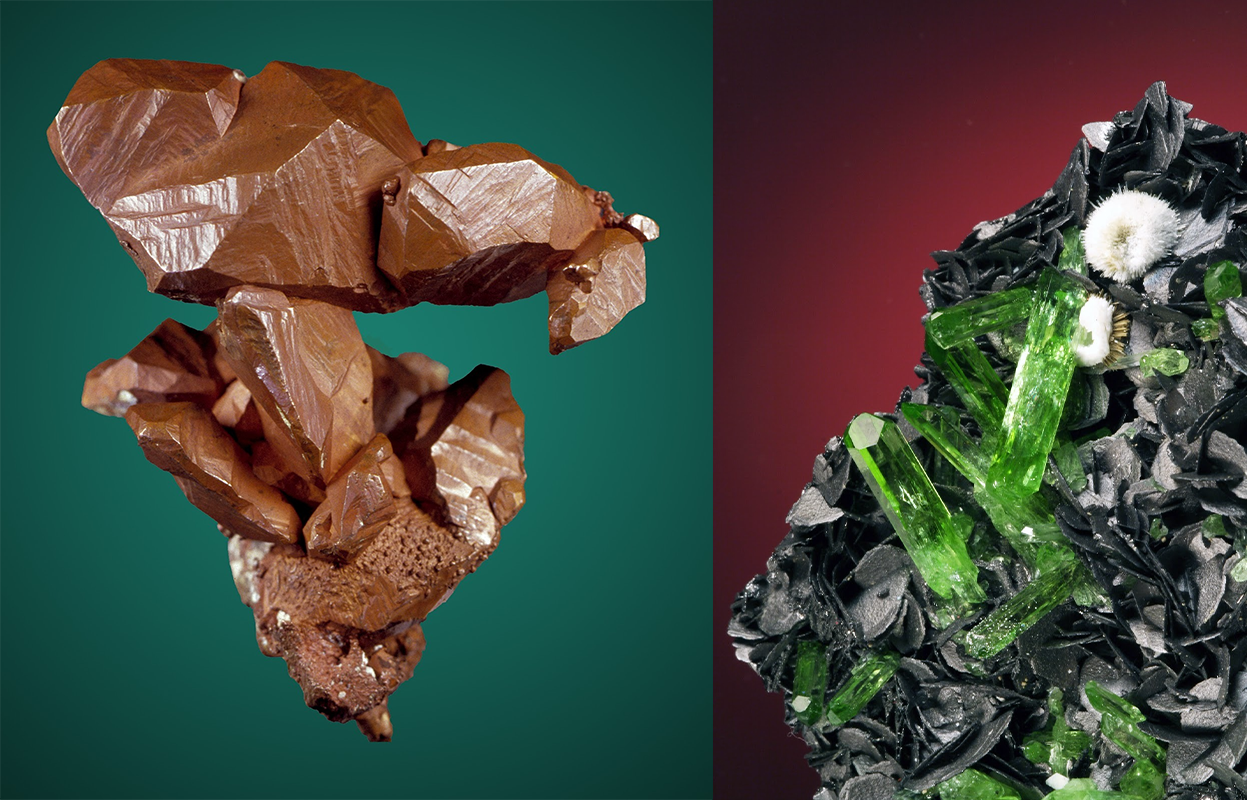
Together, the A.E. Seaman Mineral Museum and Amuse strive to make materials - in this case, minerals - meaningful without disrupting the moments of pure inspiration that might arise when viewing Michigan’s striking state gemstone or the captivating combination of green diopside fused with black graphite (which happens to be John’s favorite). There’s no virtual substitute for the in-person experience of seeing and touching these minerals. And when a visitor asks, “Where did this come from?” or “Why does it look this way?”, they can turn to Amuse to learn more.
Whether you're planning a trip to Michigan's Upper Peninsula or exploring virtually first, you can experience the museum's collection with Amuse today. Download the app to discover stories behind striking minerals from Michigan's copper country and around the world — then plan your in-person visit to see them up close.
Let's chat about how Amuse can help maximize your organization's impact.


